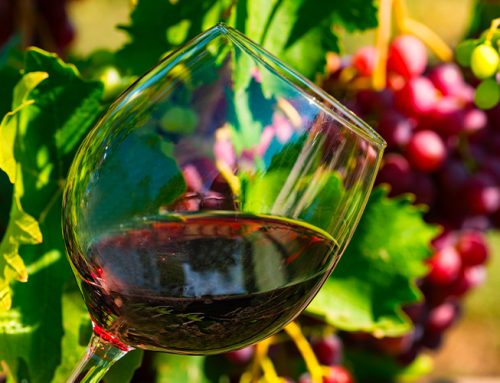
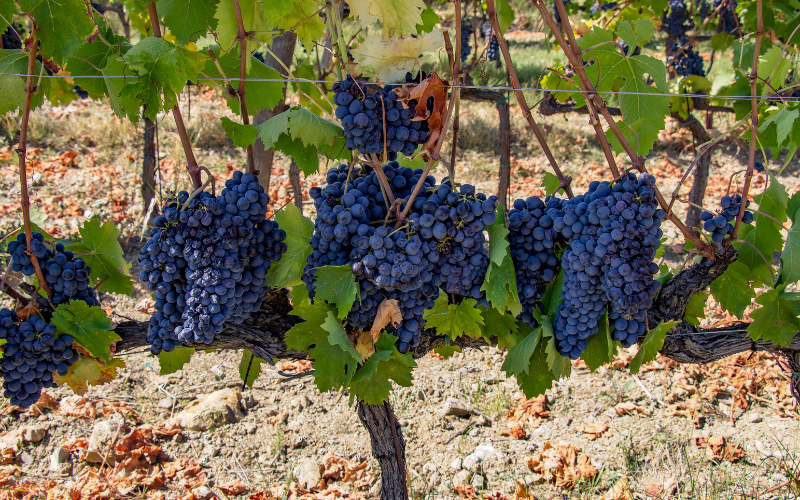
Speaking about Tuscan wine without speaking about Sangiovese is almost impossible. More than simply a grape variety, Sangiovese represents a deep part of Tuscany’s agricultural and cultural identity. It is the thread connecting very different territories, from the hills of Chianti to Montalcino and Montepulciano, crossing centuries of rural history and winemaking evolution.
Today Sangiovese is the most widespread native grape variety in Italy and one of the most important grapes in the entire country’s viticultural tradition. Yet its strongest connection remains with Tuscany, where it expresses the relationship between wine and territory in a particularly evident way.
Unlike more immediate or internationally standardized varieties, Sangiovese is a complex and sensitive grape profoundly influenced by the environment in which it grows. It changes according to climate, soil, altitude and production choices. And it is precisely this ability to transform while maintaining a recognizable identity that made it the foundation of some of Italy’s most important wines.
The origin of the name Sangiovese between history and legend
The origin of the name “Sangiovese” is still debated today, but one of the most widespread theories connects it to the Latin expression Sanguis Jovis, meaning “blood of Jupiter”.
According to several historical interpretations, the name may be linked to ancient Roman traditions and to the spread of viticulture throughout central Italy. There are also popular stories associating the grape with Monte Giove in Romagna, although no definitive historical proof exists.
As often happens with ancient grape varieties, the line between documented history and oral tradition remains uncertain. What is certain, however, is that Sangiovese has existed in central Italy for centuries and that Tuscany played a decisive role in its development and prestige.
Over time the grape became so closely associated with Tuscany that it is now perceived almost as part of the landscape itself.
A grape deeply connected to territory
One of the most important characteristics of Sangiovese is its extraordinary ability to reflect the territory where it is cultivated.
There is no single “style” of Sangiovese. The same grape can produce remarkably different wines depending on:
- climate
- altitude
- vineyard exposure
- soil composition
- production methods.
This sensitivity is exactly what makes Sangiovese so important to Tuscany. In Chianti Classico, for example, it often develops freshness, acidity and elegant aromatic profiles; in Montalcino it can become more structured and powerful; in other areas it may appear softer or more immediate.
Sangiovese is therefore not a grape variety that imposes the same identity everywhere. Instead, it allows the territory itself to emerge through the wine.
For this reason it is often considered one of Italy’s most territorial grape varieties, capable of expressing landscape and place almost as clearly as the wine itself.
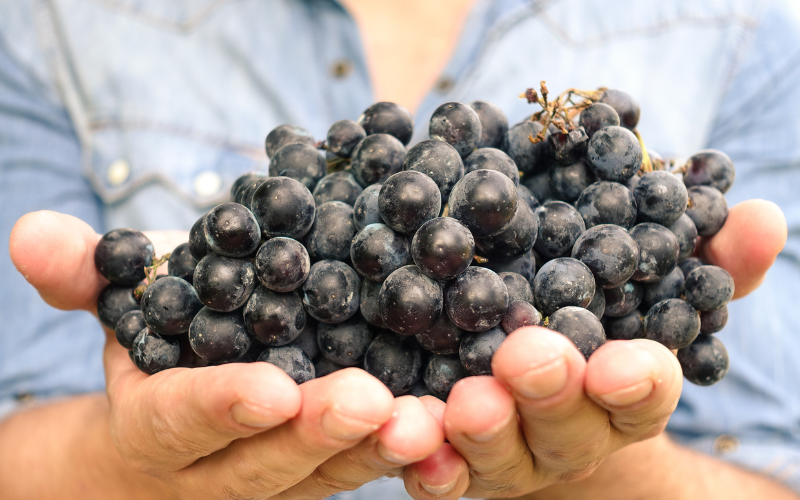
Sangiovese and Chianti Classico
The connection between Sangiovese and Chianti Classico is one of the most important relationships in Tuscan wine history.
Although production rules evolved over time, Sangiovese always remained at the center of the denomination. It was especially Bettino Ricasoli, during the nineteenth century, who helped define a production model where Sangiovese played the dominant role.
Today the Chianti Classico regulations still require a very high percentage of Sangiovese because the grape is considered fundamental to the wine’s identity.
Within Chianti Classico, Sangiovese generally develops:
- bright acidity
- firm but elegant tannins
- aromas of cherry, violet and red berries
- spicy and herbal nuances
- strong aging potential.
But beyond individual aromas, what makes Sangiovese central to Chianti is its balance between structure and freshness, qualities that make it especially suited to Tuscan cuisine.
Sangiovese between Chianti, Brunello and Vino Nobile
One of the most fascinating aspects of Sangiovese is its ability to assume different identities while remaining recognizable.
In Chianti Classico, the grape often expresses elegance, freshness and territorial tension. In Montalcino, where it becomes Brunello, it generally develops greater concentration, structure and aging potential. In Montepulciano, where it forms the basis of Vino Nobile, it may appear softer and rounder.
These differences depend not only on winemaking techniques, but above all on territory:
- different altitudes
- varying soil compositions
- microclimates
- vineyard exposure.
Sangiovese therefore becomes a true interpreter of the Tuscan landscape. It changes from one hill to another without ever completely losing its identity.
This is one of the reasons why many producers and wine scholars consider Sangiovese one of the most complex grape varieties in Italian viticulture.
The characteristics of Sangiovese
From both agricultural and winemaking perspectives, Sangiovese is considered a rather delicate and demanding grape variety.
It ripens relatively late and requires careful vineyard management as well as attention during vinification. Its characteristics change significantly depending on grape maturity and the climatic balance of each vintage.
In general, Sangiovese is known for:
- pronounced acidity
- firm tannic structure
- elegant rather than explosive aromas
- red fruit notes
- floral and spicy nuances
- strong aging potential.
Unlike softer or more immediately approachable grape varieties, Sangiovese often prioritizes freshness, balance and verticality.
This structure makes it especially interesting from a gastronomic perspective. It is not a wine focused purely on power, but on its ability to accompany food without overwhelming it.
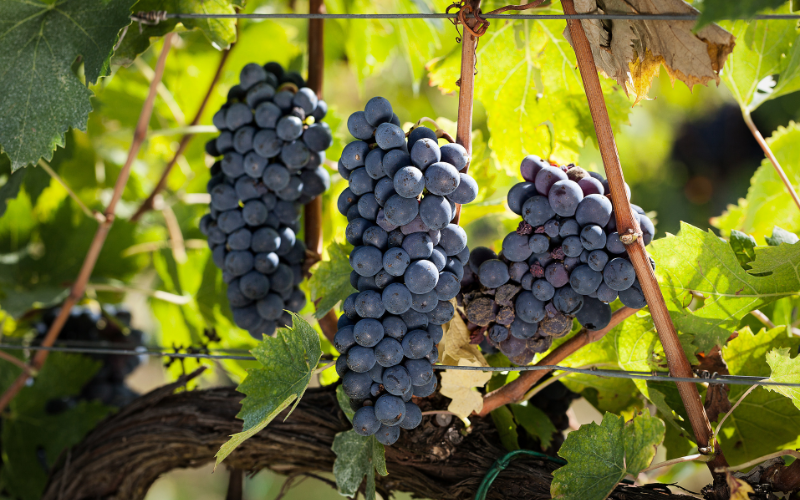
Tradition and modern interpretations of Sangiovese
Over the last decades Sangiovese has undergone a significant stylistic evolution.
For many years part of Tuscan production attempted to make the grape more internationally appealing through:
- greater concentration
- heavy oak influence
- riper styles.
Later, many producers began returning toward more territorial and balanced interpretations focused on freshness, elegance and vineyard identity.
Today several approaches coexist. Some wineries prefer richer and more modern expressions, while others pursue subtler and more traditional styles. This diversity contributes to the richness of contemporary Sangiovese.
There is therefore no single correct way to produce Sangiovese. The grape continues evolving together with Tuscan wine culture itself.
Sangiovese and Tuscan cuisine
One of the reasons why Sangiovese became so central to Tuscan gastronomy lies in its relationship with food.
Its acidity, tannic structure and aromatic profile make it particularly suitable for many traditional regional dishes:
- grilled meats
- Bistecca alla Fiorentina
- cured meats
- aged pecorino cheese
- game dishes
- rustic Tuscan cuisine.
Unlike wines that rely heavily on softness or alcohol, Sangiovese generally maintains freshness and balance even alongside rich and flavorful foods.
The historical relationship between Tuscan wine and regional cuisine will be explored further in a dedicated article focused specifically on traditional pairings.
Why Sangiovese became the symbol of Tuscan wine
Over time Sangiovese became much more than simply an important native grape variety.
Its ability to adapt to different territories while maintaining a strong identity allowed Tuscany to build much of its international wine reputation around it.
Chianti Classico, Brunello di Montalcino and Vino Nobile di Montepulciano all share their roots in Sangiovese, despite expressing themselves in profoundly different ways.
It is a grape that requires patience, balance and deep understanding of territory. Perhaps for this reason it remains so representative of Tuscan agricultural culture itself — a culture historically more interested in long-term harmony with the land than in immediate impact.
Sangiovese today between territory and identity
Today Sangiovese remains the foundation of Tuscan viticulture and one of the leading protagonists of Italian wine worldwide.
Between Florence, Siena and the hills of Chianti, the grape continues to maintain a deep relationship with the agricultural landscape surrounding it. Vineyards coexist with olive groves, forests and medieval villages, contributing to the territorial balance that makes Chianti one of the most recognizable wine regions in Europe.
In the village of San Donato in Poggio, in the heart of historic Chianti, the wine list of Locanda di Pietracupa includes labels deeply connected to Tuscan wine tradition and to the territory of Sangiovese itself.
Telling the story of Sangiovese ultimately means telling much more than the story of a grape variety: it means telling the story of a fundamental part of Tuscany’s agricultural and cultural identity.